Shopney is an easy-to-use mobile app builder for Shopify brands launching their first app. Its visual editor, built-in live chat, and hands-on support make the setup process relatively straightforward. Every plan includes native iOS and Android apps, multiple themes, push notifications, in-app campaigns, integrations, and real-time Shopify sync.
For many stores, that is enough to launch a functional mobile shopping app without writing code. The fit can become less clear when a brand needs custom app interfaces, more control over customer journeys, or a practical way to reuse Shopify features already built for the website.
Why Growing Stores Start to Outgrow Shopney
Shopney works well for merchants that want to launch with established themes and standard app features. But as the app takes on a larger role in repeat sales and customer lifetime value, this may matter more.
1. Standard design blocks can start to feel limiting as your brand grows
Shopney provides themes and a solid selection of design elements, so merchants can create a clean app without custom development. The limitation appears when a store needs a layout, interaction, or section that is not available in the existing builder.
A brand may want a different way to present a large catalog, build a campaign landing page, or change how shoppers interact with products. At that point, adjusting a standard element may not be enough. The business needs a way to build around its catalog and customer journey, even when the available themes do not support the idea.
2. Campaign triggers may fall short for multi-step shopper journeys
Shopney supports campaigns that trigger at set moments in the shopper's journey, but it lacks behavior-based automation actions. For brands building more advanced retention flows, that often means every shopper at a given moment sees the same message, regardless of what makes them different.
Some growing brands need more control over the logic behind each action. They may want to check the value of a cart before showing an offer, treat a VIP or repeat customer differently from a first-time shopper, or take no action when a condition is not met.
3. Not every Shopify experience needs to be rebuilt for the app
Many Shopify stores invest time and budget building custom product pages, quizzes, subscription portals, B2B experiences, or landing pages that already work well on the web.
Shopney cannot integrate them natively into your app experience.
When those experiences cannot be brought cleanly into the mobile app, the merchant may have to rebuild and maintain them separately. Before choosing an app builder, it is worth checking whether every custom-built web feature needs a native rebuild or whether those pages can be retained within the app.
This guide compares seven Shopney alternatives for Shopify stores, starting with Evlop, our own Shopify mobile app builder, followed by platforms suited to different budgets, teams, and mobile commerce strategies.
1. Evlop
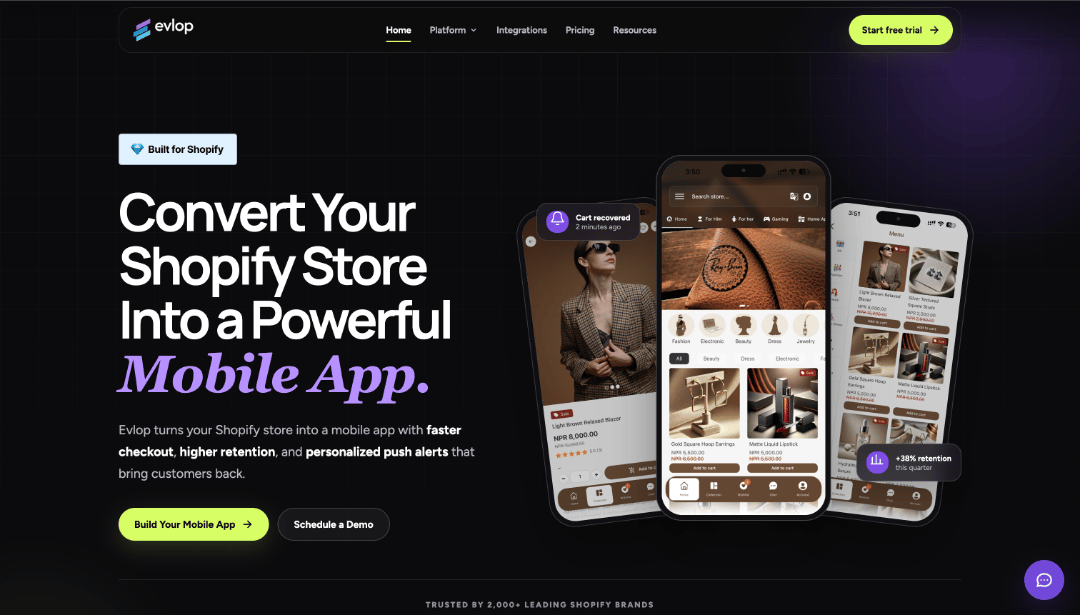
Evlop is built for Shopify and Shopify Plus brands that need more design flexibility and workflow control than a standard theme-based app builder can provide.
It creates native iOS and Android apps while keeping everyday app management visual. Merchants can start with prebuilt layouts, customize core app pages, and extend the app when their requirements go beyond the available blocks.
Compared with Shopney, Evlop gives brands more ways to create store-specific interfaces, build conditional Automation Flows, and bring a conversion option for the selected Shopify web pages into the app through an optimized WebView setup.
Evlop vs Shopney: Key Differences
1. Create app experiences around your brand and catalog
Shopney: Lets merchants customize the themes and design elements available in its builder. Requirements outside that system may need a Theme Customization Request, which Shopney lists under its Enterprise plan.
Evlop: Along with prebuilt layouts and visual design blocks, Evlop lets you turn your custom section idea into a working app block directly inside the app builder. Using Custom Blocks, you can create your own new app design elements: headers, footers, product and collection display layouts, and many more. Preview them in real time, and reuse them across any page.
That gives you more freedom to shape the app around your brand identity, customer experience, and the way your store actually works.
For example, you can:
- Create a shoppable lookbook: Build tap-to-buy outfit grids where shoppers add featured items directly to their cart.
- Build navigation around your catalog: Create multi-level collection and brand pages using vertical category side-tabs paired with top subcategory tabs when a standard menu doesn't fit how shoppers browse a large catalog.
- Create a personalized content feed: Show different stories, guides, or curated content based on what a shopper has purchased or browsed before.
You do not need a coding background to build these. The built-in AI assistant can handle the layout creation from the text prompts, and the Evlop team is available whenever you want extra hands-on support.
Evlop includes Custom Blocks (with AI) on its Professional plan at $249/month. On Shopney, extending your app design beyond built-in templates requires a Theme Customization Request, which is locked to their Enterprise plan starting at $1,299/month.
2. Automate shopper journeys with behavior-based flows
How your app responds to shopper behavior determines whether a message feels helpful or annoying. The two platforms handle behavioral messaging differently.
Shopney: Displays promotional campaigns at fixed moments, such as when a shopper opens the app, views a product page, or adds an item to the cart, without checking secondary rules first.
Evlop: Uses multi-step Automation Flows that evaluate specific rules before taking action. When a shopper triggers an event, Evlop checks your criteria first before deciding when and how to respond.
Evlop Automation Flow works like this in practice:
- Trigger: A shopper adds an item to their cart.
- Condition Check: Evlop checks the cart total, product category, and whether the shopper is a guest or a returning customer.
- Action: Based on what it finds, the flow can:
- Show an in-app message
- Send a push notification
- Take the shopper to another page
- Do nothing
Built-in journey controls:
- Branching paths: Send VIP customers down a loyalty flow while giving first-time buyers a welcome offer.
- Time delays & frequency caps: Add wait times between actions and cap triggers so shoppers aren't spammed repeatedly.
“Instead of relying only on where a popup appears, Evlop lets you respond to what a shopper is actually doing; moving them toward their next action while staying out of their way when no message is needed.”
3. Protect high-cost page investments when building for mobile
Shopney: Opens web URLs inside an unoptimized in-app browser, leaving website headers, footers, and redundant navigation intact. Because it feels like an embedded web frame, you cannot cleanly reuse those existing pages. You have to pay to rebuild them from scratch if you want a native app experience for the same feature or page you built for your website.
Evlop: Converts your existing Shopify web pages into clean app screens using an Optimized WebView setup. You keep the high-converting web features you paid for without spending extra money to rebuild them, and any changes you make on your Shopify store automatically update in the app.
How Evlop preserves your web investments and cuts ongoing maintenance:
- Automatic layout sync: Design or content updates made on your Shopify store appear on the respective app pages, reducing duplicate maintenance.
- Remove web clutter: Automatically removes website-only headers, footers, and floating widgets so the page feels native to the app.
- Syncs cart activity: Actions taken on the converted page, such as the product ‘added to cart’, update the native app cart immediately.
- Native link routing: Tapping product and collection links inside the converted page takes shoppers directly to native app screens.
Example: You can keep your homepage, collections, and cart fully native while bringing your existing web-based PDP experience into the app.
You do not have to reconfigure your app layout every time you update your website. Evlop retains the selected web pages and their updates while the rest of the app stays native.
Best for: Growing Shopify brands that want a visual mobile app builder with AI-assisted Custom Blocks, conditional Automation Flows, and flexible WebView and Native app setup options.
Start a 14-day free trial | Schedule a demo
Worried About Switching From Shopney?
Switching platforms shouldn't mean abandoning the time and budget you’ve already invested in fine-tuning your mobile store.
When UK brand TruClothing migrated their live store to Evlop, their existing App Store listings were updated directly, preserving all push subscribers, customer installs, and reviews without forcing customers to re-download a new app.
“Amazing experience. While publishing the app to Apple and Android, we struggled with a few things, but support helped us with everything. I am glad that we have changed the app builder to Evlop. I can recommend these guys!”
-TruClothing Shopify App Store review.
Evlop manages the heavy technical lifting so your past investment isn't wasted and your growth doesn't stall.
Already running a mobile app? Request a free migration assessment to map out your transition before making a decision.
2. Tapcart
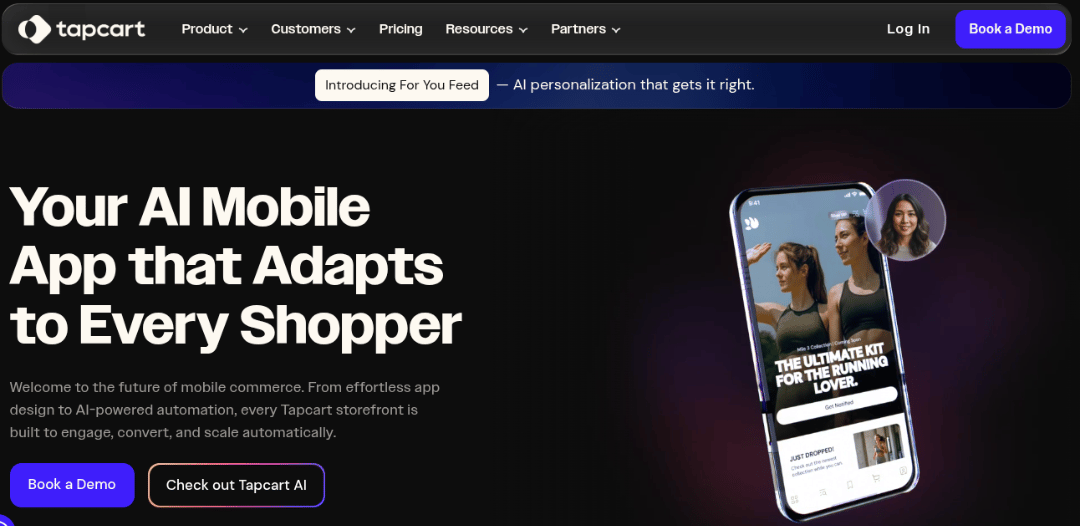
Tapcart is one of the established Shopify mobile app builders. It is best suited to brands that already treat their app as a meaningful growth channel and have enough traffic to support ongoing testing and optimization.
Plans range from $500 to $2,850 per month. Higher tiers add more advanced testing, segmentation, analytics, and personalization capabilities. For an app with a substantial user base, these tools give ecommerce teams more ways to study shopper behavior and improve the experience over time.
For a merchant moving from Shopney, Tapcart's clearest advantage is its optimization infrastructure. Teams can test variations, target content, review app behavior, and use the results to guide future changes.
The tradeoff is that a smaller team may not use enough of that infrastructure to justify the cost. A merchant mainly looking for more control over store-specific interfaces may have different priorities.
Best for: Brands with substantial app traffic and teams prepared to run regular tests and analyze the results.
3. Appbrew
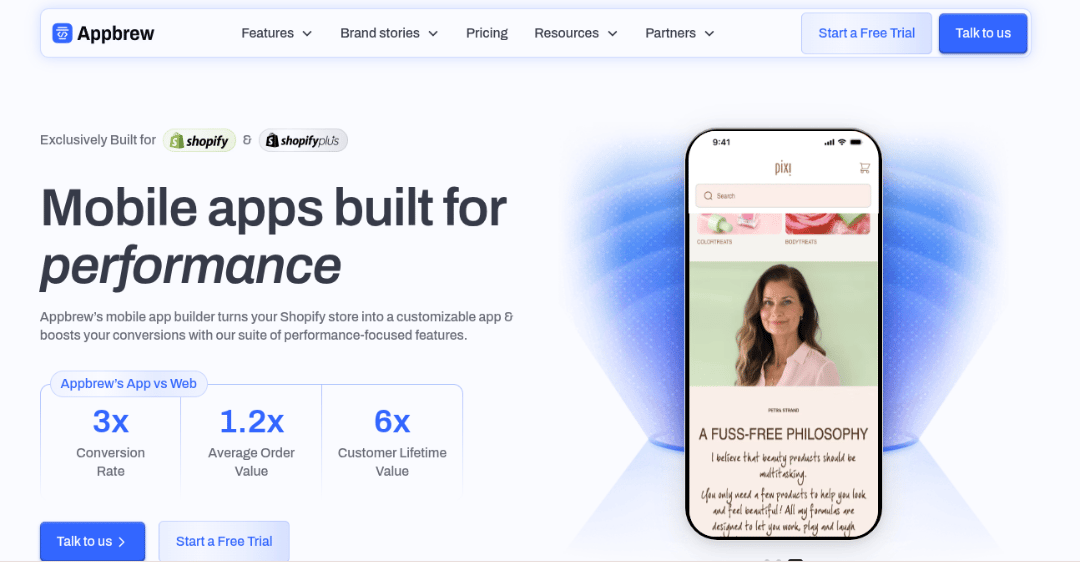
Appbrew takes an AI-led approach to mobile commerce, building its platform around personalization and storefront experimentation.
Its Starter plan begins at $199 per month and covers the core native app experience. AI-powered personalization, A/B testing, conditional visibility, and several premium features are available from the Pro plan, which starts at $599 per month.
Appbrew is a relevant Shopney alternative for brands that want to test and personalize what different shoppers see. Its approach fits teams that plan to use customer and product data to refine product pages, collection pages, promotions, and other app content.
Pricing should be reviewed beyond the base subscription. Appbrew's Shopify App Store listing notes that additional charges may apply based on app performance. Merchants should ask how those charges would be calculated at their expected app revenue and order volume.
Best for: Brands looking for AI-led personalization and conversion testing and willing to invest in the Pro feature set.
4. Superfans
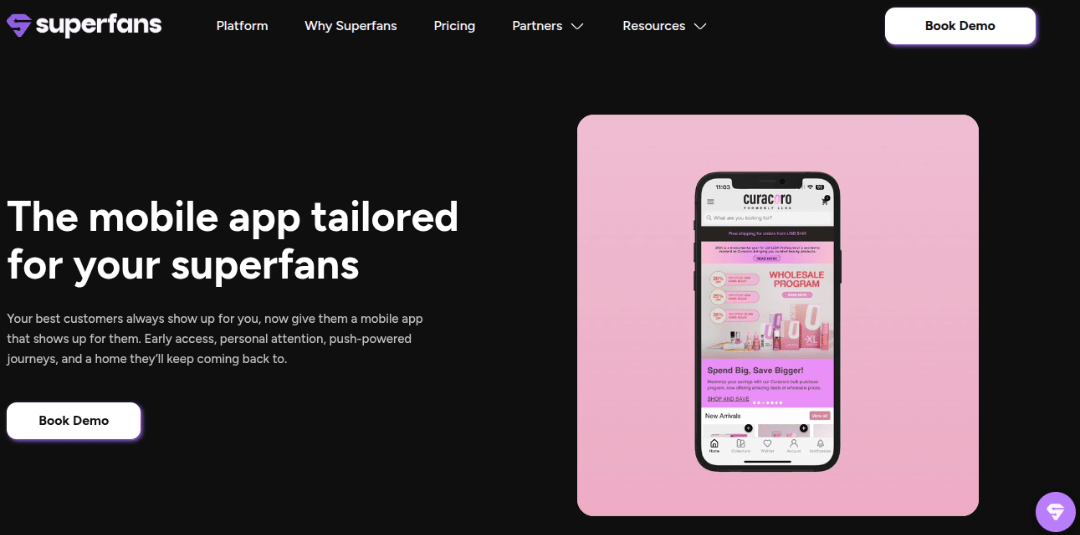
Superfans, formerly Vajro, positions the mobile app as a destination for a brand's most engaged customers. It also has an extensive review history on the Shopify App Store.
The platform focuses on app-exclusive drops, discounts, shipping offers, gifts with purchase, and other experiences intended to bring loyal customers back. This can suit fashion and beauty brands that rely on frequent launches and already have an active customer base.
Its Unlimited plan is $1,000 per month and adds unlimited blocks, integrations, and landing pages, along with custom feature development, multiple currencies and languages, and advertising integrations.
It is aimed at brands prepared to run the app as a dedicated customer-engagement program. It may be more than a merchant needs for a basic mobile storefront.
Best for: Brands that use app-exclusive releases, loyalty offers, and repeat-customer programs as part of their regular marketing calendar.
5. Apptile
Apptile is designed for teams that change campaign content often and want video and visual merchandising tools inside the builder.
Its Tile-based builder gives brands different ways to present collections, campaigns, video, editorial content, and other storefront experiences. That makes it particularly relevant for merchants that frequently change what shoppers see around launches, seasonal collections, or campaign moments.
The platform is built around shoppable video, Instagram-style stories, and drag-and-drop content blocks. Brands in beauty, fashion, and lifestyle often find this appealing, since discovery plays a bigger role in the buying journey than it does for more transactional categories. It’s plans currently start at $249/month. Live selling is also part of the offering, although additional usage fees can apply as usage increases.
Apptile prioritizes visual polish over functional depth. That makes it a great fix if your biggest bottleneck is storefront design, but less ideal if you need your app to handle custom store logic or behavior-driven automations.
Best for: Merchandising teams that run frequent campaigns and want shoppable video, stories, and flexible visual content.
6. OneMobile
OneMobile is particularly approachable for merchants launching their first mobile app, with a free entry option, a straightforward setup process, and the option to publish through OneMobile’s shared developer accounts.
Its ScaleUp plan starts at $99/month and expands the design, analytics, and engagement capabilities available beyond its free entry option. That can make it appealing to merchants that are still validating whether mobile will become a meaningful sales channel.
The pricing model deserves more attention as app revenue grows. Once monthly app revenue on ScaleUp exceeds $2,000, OneMobile applies a 2.9% infrastructure fee to orders above that threshold. Higher plans use different revenue allowances and rates.
For an established store, the $99 subscription should therefore be considered alongside the possible infrastructure fee at the app's expected revenue.
Best for: Merchants testing their first mobile app who want to keep the initial subscription cost low.
7. Plobal
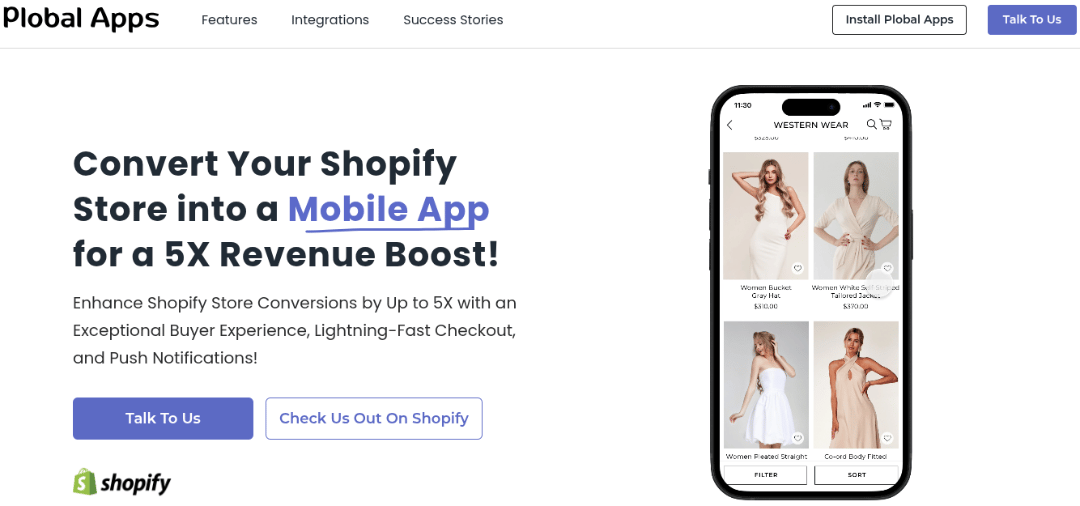
Plobal focuses heavily on what happens after a merchant starts building an app audience: understanding users, segmenting them, and bringing them back.
Its Starter plan is free to install and charges 3% of in-app sales. It includes native iOS and Android apps, a drag-and-drop builder, two standard integrations, unlimited push notifications, real-time analytics, and support.
The paid Growth plan starts at $199 per month and includes four standard integrations, analytics, and live-chat support. Higher tiers add capabilities such as abandoned-browse campaigns, segmented notifications, product filtering, and dedicated account support.
Much of Plobal Apps' value appears after a merchant has built an app audience and wants to segment users or bring them back with targeted campaigns. Stores expecting substantial in-app revenue should calculate the sales-linked charges before comparing the platform with flat-price alternatives.
Best for: Merchants prioritizing analytics, segmentation, and re-engagement who have calculated the sales-linked cost at their expected app revenue.
[Pricing checked in August 2026. Plans, features, and usage-based fees can change, so confirm current details with each provider before making a final decision.]
Conclusion
Shopney remains a practical option for merchants that want a well-supported way to launch a native Shopify mobile app with established themes and core engagement features.
The right alternative depends on what has become the limiting factor. Some brands need a larger testing and personalization stack. Others care more about visual merchandising, loyalty, analytics, or keeping the initial cost low.
When the priority shifts to driving repeat sales and customer lifetime value, Evlop becomes the stronger fit, giving growing brands full control over how the app looks and operates as they scale.
Switch to Evlop or launch fresh — fast, with hands-on support. Start your 14-day free trial.