OneMobile has become a popular choice for Shopify merchants looking to launch native mobile apps without the cost and complexity of building one from scratch. Its free plan, relatively simple setup, and option to publish under OneMobile's shared developer accounts make it especially appealing to brands exploring mobile commerce for the first time.
OneMobile's paid plans include an infrastructure fee once app revenue exceeds the monthly threshold included with the plan. The fee currently ranges from 2.9% to 1.2% per order depending on the plan. Its builder also relies largely on themes and pre-built design blocks, which may become restrictive for brands that need more specialized storefront experiences.
These are reasonable trade-offs for many merchants getting their first app live. They can matter more once the app starts generating meaningful revenue or the brand needs functionality that goes beyond the standard building blocks.
Why Growing Shopify Brands Start Looking Beyond OneMobile
OneMobile works well for getting started, but getting an app live is only the first step; as stores scale, merchants often run into three core operational limits:
Pre-built layouts can become limiting as your brand grows
OneMobile covers the layout basics with standard templates and predesigned blocks, but that means every app follows the same basic structure, so most apps end up looking similar. This works fine for simple stores, but once you need custom app sections, more specific navigation, or shopping experiences built around how your store actually sells, predefined blocks can start to feel restrictive.
Instead of simply adjusting an existing block, growing brands may want the flexibility to create experiences around their own catalog, customers, and business requirements.
Push automation can become limiting for multi-step customer journeys
Push notifications are one of the biggest reasons brands launch a mobile app. OneMobile supports notifications and automated triggers like cart reminders, but merchants building multi-step campaigns often need deeper control over what happens next and when based on customer behavior
For growing brands, that matters most when follow-ups need to adjust to cart value, purchase behavior, or inactivity rather than sending the same journey to a broad customer segment.
Revenue caps and infrastructure fees make platform costs less predictable
OneMobile charges additional fees once app sales cross the revenue allowance included with a plan.
On the ScaleUp plan, for example, once monthly app sales exceed $2,000, OneMobile charges a 2.9% per-order infrastructure fee on any revenue above that threshold.
As mobile becomes a larger sales channel and revenue grows, that variable fee can directly increase the cost of running the platform.
“The question isn't whether OneMobile can get your app live. But whether its customization, automation, and pricing match your long-term growth plan for your mobile channel?”
In this guide, we evaluate the top OneMobile alternatives, starting with Evlop, our own Shopify mobile app builder, followed by platforms designed for different technical needs and budgets.
Quick Look: Best OneMobile Alternatives
| Alternative | Best Fit | Price /mo (starter) |
|---|---|---|
| Evlop | Growing Shopify brands that need more control over app design, customer engagement, and flat pricing | $99 |
| Tapcart | Brands with dedicated mobile teams and larger budgets that require advanced A/B testing and a mature mobile commerce ecosystem | $500 |
| Appbrew | Brands focused on AI-led personalization and experimentation | $199 |
| Apptile | Content-heavy brands using video and social-style shopping | $249 |
| NAPPS | Fashion/lifestyle brands focused on drops and app-exclusive experiences | $299 |
| Shopney | Merchants wanting no-code app building with pre-built themes | $149 |
| Hulk | Merchants prioritizing lower cost and core app functionality | $79 |
(Pricing checked August 2026. See each provider's website for current details.)
1. Evlop
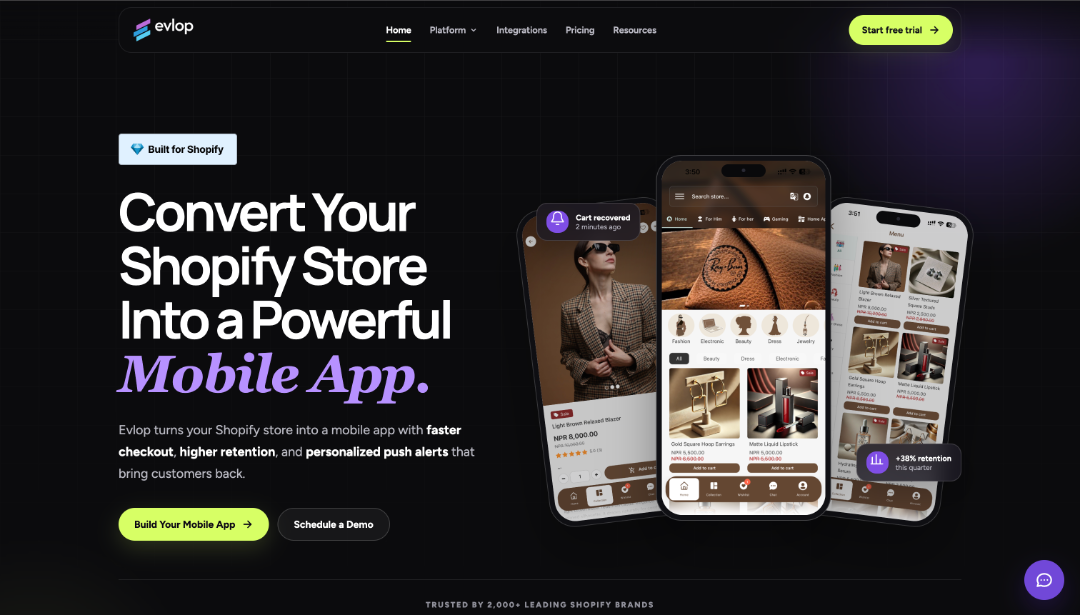
Evlop is built for Shopify and Shopify Plus brands that want mobile to be a high-converting growth channel, not just a basic storefront.
It creates native iOS and Android apps designed to help growing merchants move beyond the limitations of standard template-based app builders.
While OneMobile works well for basic launches, Evlop is built for long-term growth. You get deeper customization options, automated retention tools, and flat monthly pricing with zero transaction cuts on your revenue, plus unlimited design blocks and unlimited push notifications right from the Starter plan.
Evlop vs OneMobile: Key differences
Both platforms make it easier to build and manage a Shopify mobile app, but they are better suited to different requirements.
While OneMobile focuses on quick setup and predefined layouts, Evlop gives growing brands more flexibility to shape the experience around how their customers actually browse, shop, and engage.
1. Build the app around your brand, not predefined layouts
OneMobile: Lets merchants customize its built-in layouts, including colors, banners, and other visual elements within its block systems, but the experience remains largely within its pre-built block system.
Evlop: Extends visual app building with Custom Blocks, allowing merchants the flexibility to create new sections or replace standard blocks with experiences built around specific business requirements.
For example, you can:
- Create multi-level navigation for large catalogs: Build navigation such as multi-level collections with vertical side tabs and header tabs, giving shoppers a clearer way to browse larger catalogs and discover products that interest them.
Build Custom cart and Pricing rules: Custom Blocks can read customer tags and logged-in customer information to create experiences such as B2B pricing for wholesale buyers alongside regular retail pricing.
You can also create cart progress experiences that unlock a reward once the cart reaches a certain threshold.
Conditional section visibility: Set rules to automatically show or hide app sections using customer-specific and store data.
For example, banners and layouts can change depending on a shopper's location, active cart items, preferred language, local currency, or other available data, allowing you to create a more personalized shopping experience.
This gives merchants more room to shape the app around how their business actually works rather than relying only on predefined storefront sections.
2. Turn shopper behavior into automated customer journeys and follow-ups
OneMobile: Supports automated notifications and triggers such as cart reminders. For merchants that need more complex journeys, multi-step branching based on customer behavior can become limiting.
Evlop: Goes deeper with Automation Flow, it gives merchants more control over the conditions that determine when an action happens and what should happen next.
That can be used for journeys such as:
- Lifecycle follow-ups: Automate welcome, post-purchase, and inactivity messages based on shopper behavior.
- Smart abandoned-cart flows: Treat high-value shoppers differently by setting rules based on cart totals. You might send a standard reminder for a smaller cart while offering a different incentive, such as free shipping or a gift, for a larger order.
- Review requests: Trigger app-review prompts after delivery or selected in-app interactions, and direct iOS and Android shoppers to the appropriate app store.
Once configured, these flows run automatically based on shopper behavior and the conditions you define.
3. Keep platform costs independent of app revenue
OneMobile: Charges additional infrastructure fees once app revenue crosses the monthly allowance included with a plan.
Evlop: Keeps subscription pricing flat starting at $99 per month, with 0% transaction fees and zero revenue share; a pricing model that does not take a percentage of growing app sales.
If app revenue grows from $10,000 to $100,000 per month, that revenue increase alone does not change the subscription cost of your existing Evlop plan.
For merchants expecting mobile revenue to grow significantly, this can make platform costs easier to forecast.
Worried about switching? Migration without starting over
For merchants with an app already live, switching platforms raises a critical question: what happens to the app listing, existing users, and reviews?
Mobile 2000, one of Evlop's Shopify Plus merchants, had already launched mobile apps on other platforms before moving to Evlop. Instead of starting over from scratch, their existing app listing was directly updated to run on Evlop.
Here's how they described the move:
"After conducting extensive research and working with numerous mobile app builders, I can confidently say that this is the perfect solution for my needs. This app offers all the features and options found in multi-million dollar projects. Additionally, their support is outstanding — they assign a dedicated representative who provides prompt, clear, and easy-to-understand answers to any queries."
-Mobile 2000 (Kuwait), Shopify App Store review
Moving platforms doesn't mean starting your mobile channel from scratch. Evlop handles the migration so you can keep your existing app listing, customer base, and reviews intact.
Already have a live app?
Get a Free App Migration Audit →
(Keep 100% of your reviews & existing users)
2. Tapcart
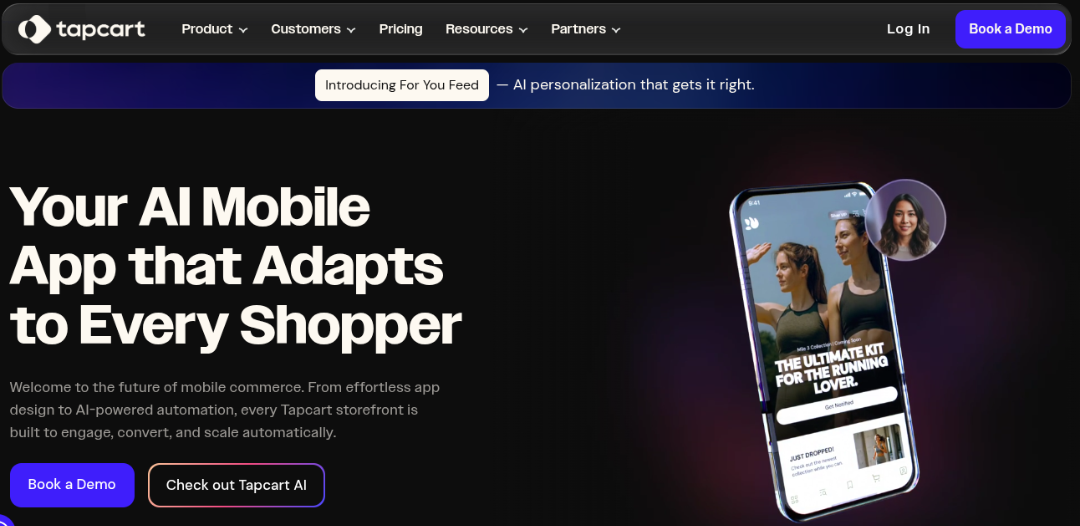
Tapcart offers Shopify merchants a visual system for building and managing native iOS and Android apps. Its Growth plan currently starts at $500 per month and includes unlimited blocks, integrations, and push notifications, while higher tiers add testing, segmentation, and developer tooling.
The main consideration for merchants moving from OneMobile is the level of platform investment required, as Tapcart offers an extensive, enterprise-tier mobile commerce ecosystem.
Merchants looking for more flexibility without beginning at that level of spend may also consider platforms such as Evlop, where visual app building can extend into Custom Blocks and custom development as requirements become more specific.
3. Appbrew
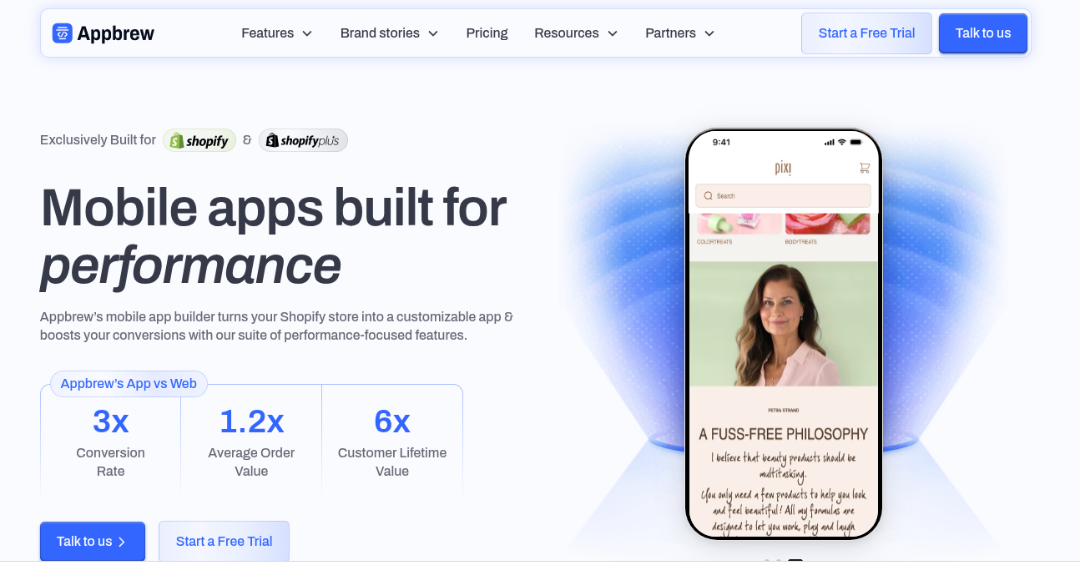
Appbrew takes an AI-led approach to mobile commerce.
Its Starter plan currently begins at $199 per month, while the $599 Pro plan adds AI-powered personalization, A/B testing, conditional visibility, and other optimization capabilities.
That makes Appbrew particularly relevant when AI-assisted merchandising, personalization, and experimentation are central to your mobile strategy.
For merchants comparing OneMobile alternatives, the main question is whether AI-led optimization is the capability driving the switch or whether the priority lies elsewhere, such as storefront flexibility, customer journeys, or platform economics.
4. Apptile
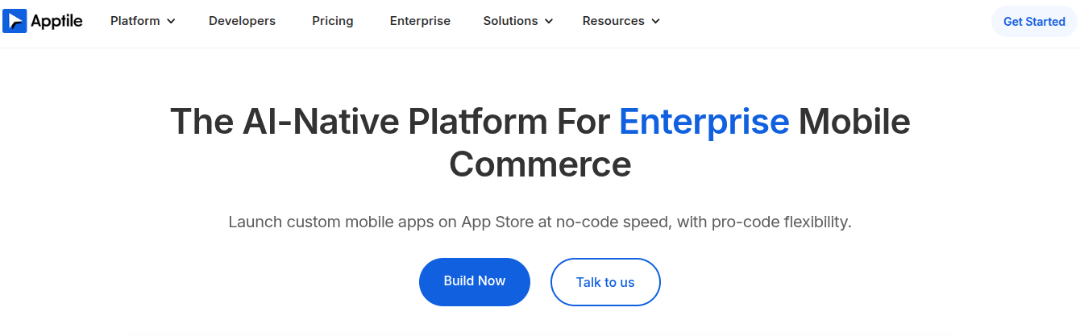
Apptile approaches mobile commerce from a different angle, putting more emphasis on storytelling and engagement than on creating a straightforward replica of an online storefront.
Its plan currently starts at $249 per month. The platform allows merchants to build experiences around shoppable videos, Instagram-style stories, live-selling events, interactive content blocks, and drag-and-drop layouts. Brands in categories such as beauty, fashion, and lifestyle often find this approach particularly appealing because discovery and inspiration play such an important role in the buying journey.
Merchants moving from OneMobile often choose Apptile because they want a more content-driven experience that feels closer to social commerce than traditional ecommerce.
Its strongest fit is therefore for brands that want content, video, and visual product discovery to play a central role in the mobile shopping experience rather than for behavior-based automation or B2B-style customization, so brands with more complex segmentation or workflow needs may find it limiting.
5. Shopney
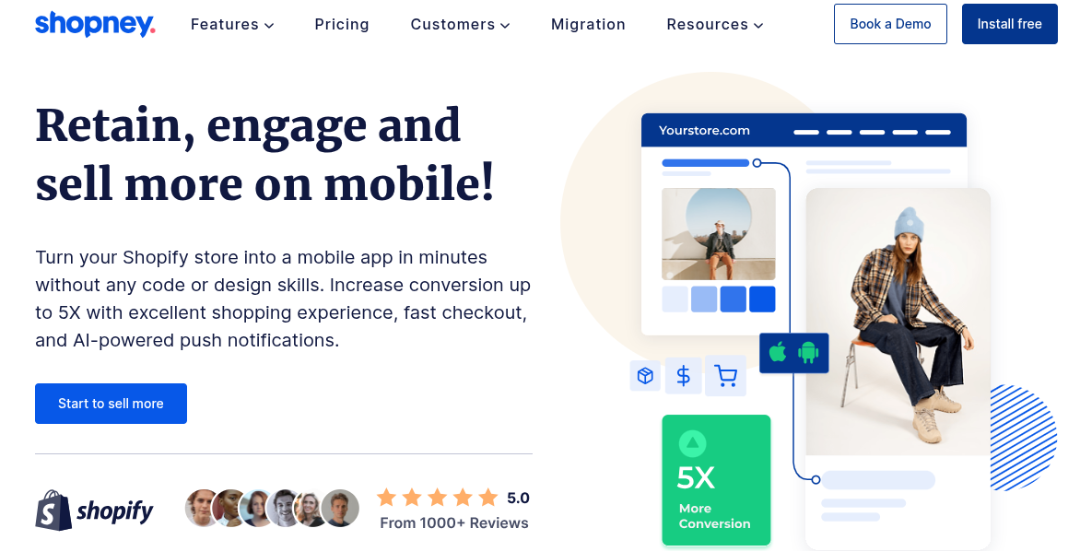
Shopney focuses on making the Shopify-to-mobile app process straightforward.
Merchants can start with pre-built themes and customize the visual presentation of their app, including different layouts for product and collection pages.
The platform also includes features such as in-app chat and integrations with a brand's existing Shopify tech stack, giving merchants a practical way to operate a branded mobile storefront without custom development.
Pricing starts at $149 per month for the Silver plan, making core layout and theme options more accessible than enterprise platforms like Tapcart.
Shopney can be a strong fit when straightforward app building, design themes, and built-in engagement tools cover your requirements. Brands that need more flexibility than a block library allows may be better served by a platform built for deeper customization, like Evlop.
6. NAPPS
NAPPS combines visual app building with a strong emphasis on mobile merchandising and app-exclusive experiences.
Its Business plan currently starts at $299 per month and includes tools for product and collection drops, lookbooks, scheduled notifications, and home screens. Higher tiers expand into shoppable video and additional merchandising capabilities.
That makes NAPPS particularly relevant for fashion, lifestyle, and community-led brands where launches, visual discovery, and app-exclusive shopping experiences are an important part of the mobile strategy.
7. Hulk
Hulk focuses on accessible no-code app creation for Shopify merchants.
Its Basic plan currently starts at $79 per month and covers the core requirements for launching native iOS and Android apps, with higher tiers adding capabilities around notifications, reporting, automation, and integrations.
That makes Hulk one of the lower-cost options in this comparison.
For merchants considering a move from OneMobile, the main question is whether a lower starting price is the priority or whether they expect to need more advanced capabilities as their mobile channel develops.
Conclusion
OneMobile can make sense for merchants looking for a simple way to launch a mobile app, particularly when ease of setup and a low barrier to getting started are priorities.
If your priorities are greater control over the app experience, more configurable customer journeys, and platform pricing that does not increase as a percentage of app sales, that's where Evlop can become the stronger fit.
Build or Migrate Your Mobile App with Evlop →
(Includes a 14-day free trial & seamless, uninterrupted app migration)