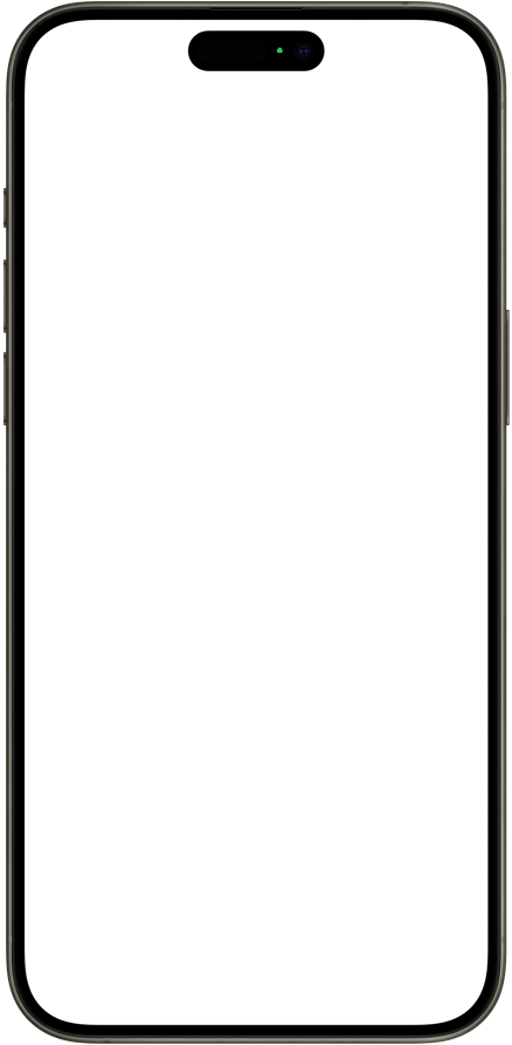
Custom HTML block
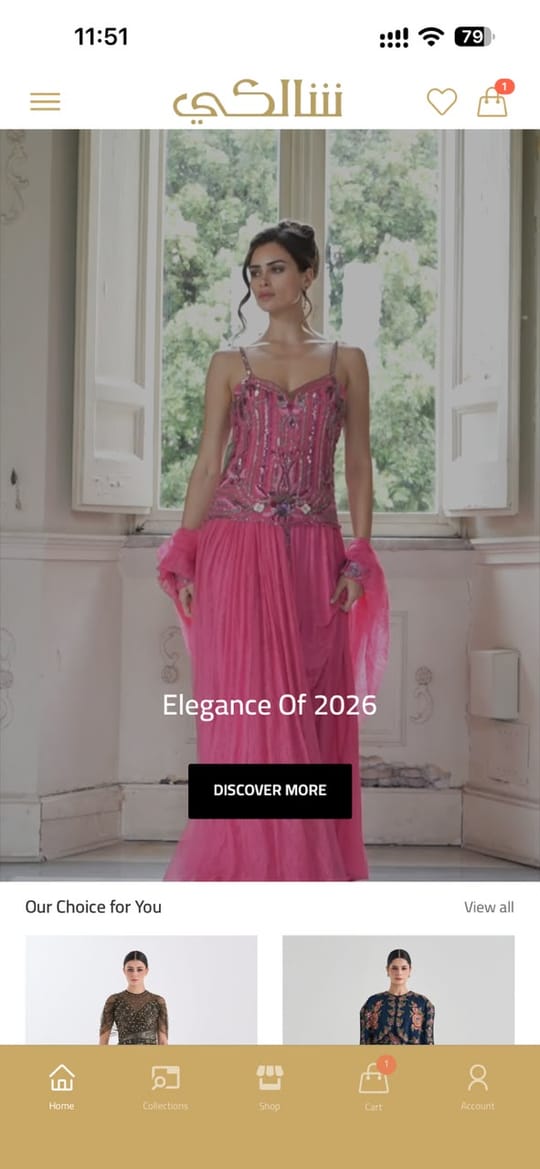
The video-led homepage and its call to action, recreated for the app by Shalky’s team.
 ShalkyCouture house · Saudi Arabia

Shalky sells hand-embroidered evening dresses, bridal pieces and kaftans from eight mall showrooms across Saudi Arabia. In April 2026 it launched a native app that looks like the house in Arabic and in English. Six months after launch, more than a tenth of the store’s revenue comes through it.

Revenue share: Evlop order data. Growth figures: Shalky’s Shopify data.
Shalky is led by designer Qassem Al Qassem, who brings more than 17 years of his own design work to a family fashion legacy of over 70 years. The collections cover evening dresses, bridal, haute couture and kaftans, and hand embroidery is the signature on all of them.
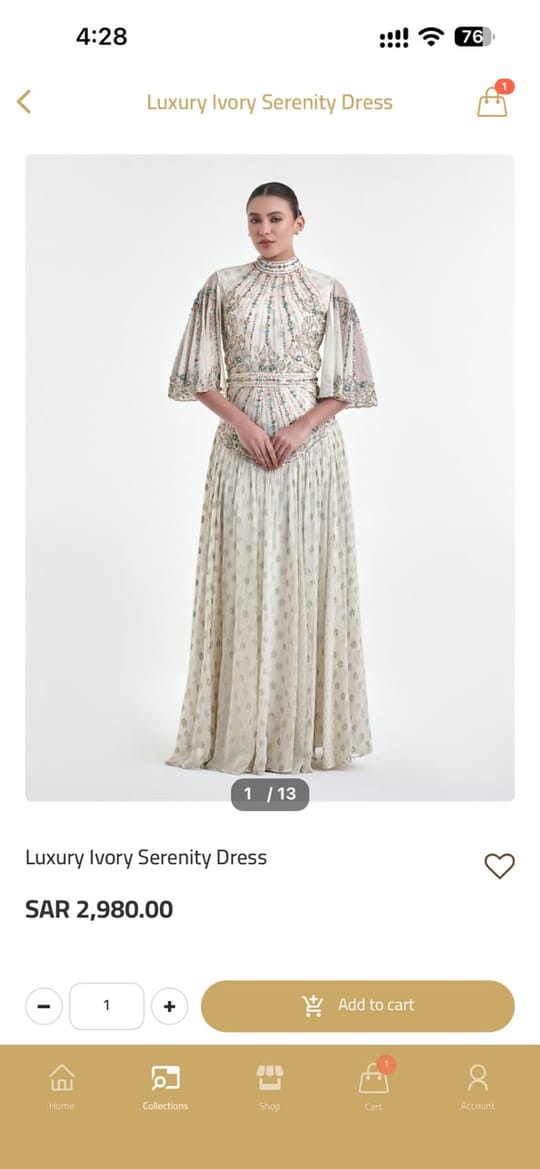
The pieces shown in the app’s Elegance of 2026 collection run from SAR 2,480 to SAR 2,980. A customer finds a dress, saves it, thinks about the occasion, and comes back. Shalky already had loyal customers and a Shopify Plus storefront that looked the part. What it lacked was a place on the customer’s phone for that second and third visit.
Fashion purchases, especially in our category, do not always happen during the first visit. A customer may discover a piece, save it, think about the occasion, and come back later. The app gives us a stronger opportunity to stay connected during that journey and make the return experience much easier.
 Ramy KhalilMarketing Director, Shalky
Two things mattered to the marketing team.
Some of the storefront’s brand-defining sections, including a video-led homepage with its own call to action, needed more flexibility than standard prebuilt app components could give. The team did not want an app that felt like a simplified version of the website.
Shalky has a very specific visual language. Whether a customer enters a showroom, visits our website, sees a campaign on social media, or opens the app, the experience should still feel unmistakably Shalky. That consistency was one of our main priorities.
Ramy KhalilMarketing Director, ShalkyShalky used Evlop’s conditional section visibility to build dedicated Arabic and English experiences, with right-to-left layouts for Arabic. These are the real app screens for the same collection. Pick a number to see what moves.
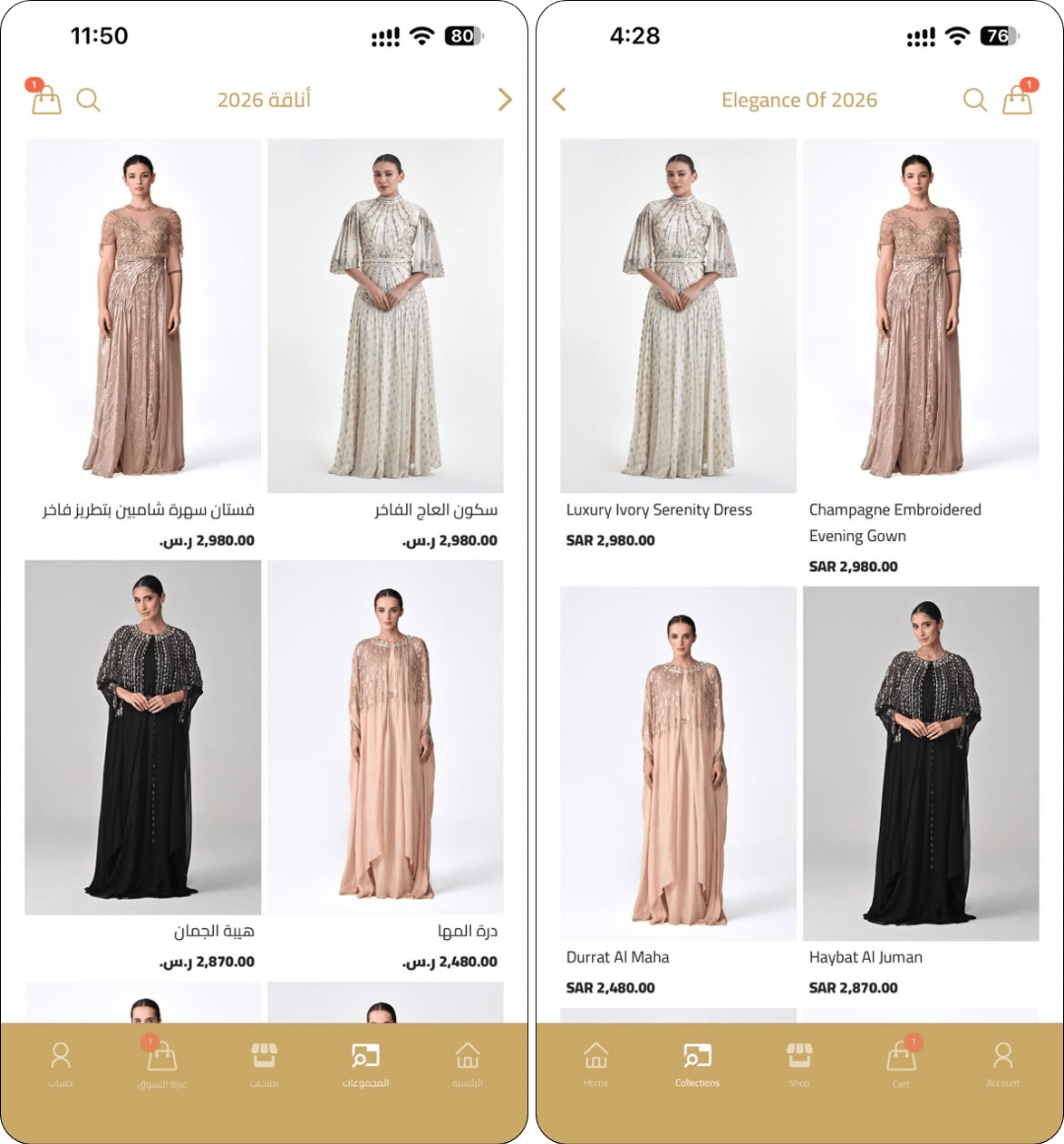
What flips
Evlop’s native components run the shopping journey: browsing, customer accounts, wishlists, cart and checkout, all synced with Shopify in real time. For the sections that needed more control, Shalky’s team used Evlop’s custom HTML block to recreate the video-led homepage and its call to action for the app, working in React Native, Shopify Liquid, HTML, CSS and JavaScript.
After launch, Shalky’s internal team manages routine content updates and campaigns. The app’s pages have been edited and saved 268 times since the trial began in April.
The video-led homepage and its call to action, recreated for the app by Shalky’s team.
A customer who showed interest in a piece hears about it when the price drops or it is back in stock.
A reason to complete the purchase in the app once she has decided.
Evlop allowed us to combine native functionality with custom development where we needed more control.
Ali AhmedSenior Developer, Shalky268page edits saved since the trial began in April
Shalky installs Evlop on its Shopify Plus store.
22 days after the trial began.
“The best application if you want Mobile application for your Shopify Store.”
The strategy was to shorten the distance between interest and purchase. Wishlists hold the pieces a customer is considering. When she returns, the collection, the dress and the cart are each one tap apart.


From the April 2026 launch period to August 2026, Shalky’s Shopify data showed monthly app sales up 30× and monthly active users up 18.6×.
By August more than half of active app users were returning users, and the app had gone from under 1% of store sales to about 10% of revenue and 11% of orders. Growth was not a straight line: by Shalky’s figures, June and July both recorded higher app sales than August.
10.6% of orders in the same 30 days.
Evlop’s own order data, measured independently in the 30 days to 11 November 2026, puts the app at 10.9% of revenue and 10.6% of orders, in line with the roughly 10% and 11% Shalky reported for August.
For a couture house, the size of the order matters. Over those 30 days the average app order was 3% larger than the average order across web and other channels. Big-ticket pieces sell through the phone as readily as anywhere else in the store.
One of the strongest signals for us was seeing customers return to the app. More than half of our active users in August were returning users. That tells us the app is becoming part of the customer journey rather than being something people download once and forget.
Ramy KhalilMarketing Director, ShalkyThe next phase is personalization. Ramy’s team is studying wishlist activity, cart value, past purchases, the categories each customer views and how often she opens the app. A customer with a history of haute couture purchases could see new couture first. Someone who keeps browsing kaftans could get a different journey from someone shopping for a wedding.
Revenue share, order share and the order-value comparison: Evlop order data for the 30 days to 11 November 2026. Growth from April to August 2026, active users and returning-user share: Shalky’s Shopify data, as reported by the Shalky team.

 Honeydew USAWholesale kids' clothing (B2B) · United States
54%of online revenue comes through the app
Read the story
 Lust MéxicoSneakers & streetwear · Mexico
37%of Shopify revenue through the app (30 days to 11 Nov 2026)
Read the story
 Tai Lee HongWholesale food · United Kingdom
76%of online orders placed in the app
Read the story