Arabic to Vietnamese
Arabic, Chinese, English, French, German, Italian, Japanese, Korean, Malay, Portuguese, Thai and Vietnamese, with Chinese in two scripts.
 Push!ColorContact lenses · Japan
Push!Color has sold colored contact lenses online since 2011 and calls itself the oldest site of its kind in Japan. Its global store sets its own prices for international markets, so before it committed to an app it asked one question: can the app show each shopper their own market's price?
App revenue from app orders recorded by Evlop. Languages per the App Store listing, 11 November 2026.
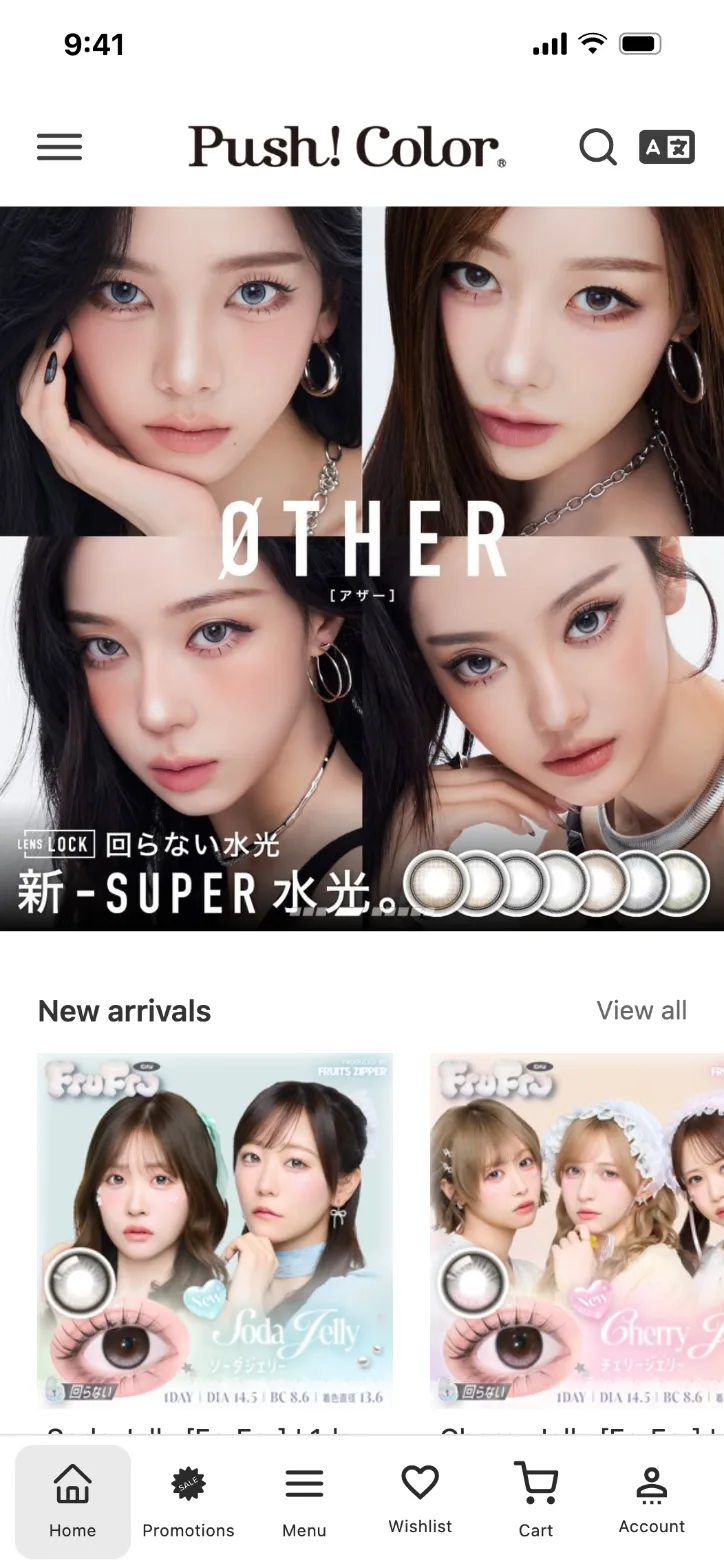
Push!Color describes itself as the oldest color contact lens site in Japan. Its cross-border store, Push!Color GLOBAL, ships the same Japanese brands overseas: PRIMORE, EverColor, ReVIA, MOLAK and dozens more.
Price is the complication. Push!Color runs its international business on Shopify Markets, so a shopper abroad sees the price set for their own market, in their own currency.
Today the website runs in 14 languages. Until 2024 the store had no app. Lenses are a repeat purchase. A customer who wears one-day or monthly lenses comes back when the box runs out, and an icon on the home screen is the shortest route back.
Push!Color needed the app to show each market's own prices. Evlop built Shopify Markets pricing into the app and shipped it in 20 days.
Push!Color started its Evlop trial on 28 May 2024 and went straight to the hard part. The first questions were about how language and currency switching behave in the app. Then came the one that mattered. In the trial build a shopper only saw their market's price at checkout. For a store whose prices differ by market, that meant a product page showing one price and a checkout showing another.
The team told Evlop that solving it would decide the app.
Evlop moved Shopify Markets support to the front of its roadmap. On 17 June 2024 market-specific pricing was live in the app. A shopper now sees their own market's price from the first product they open, and the same price at checkout.
Three weeks after that the iPhone app was on the App Store. It was Push!Color's first app.
Push!Color asks whether the app can show each market's own prices.
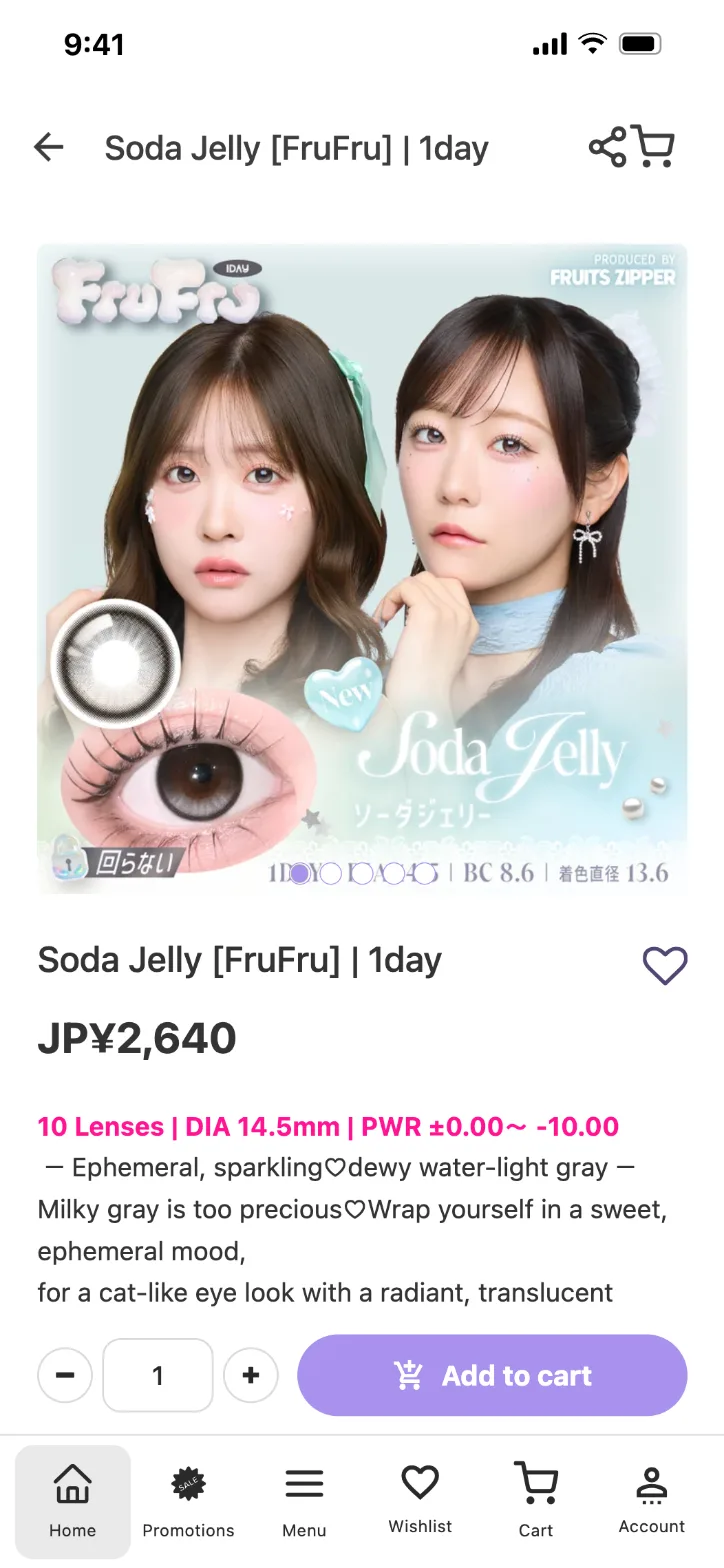
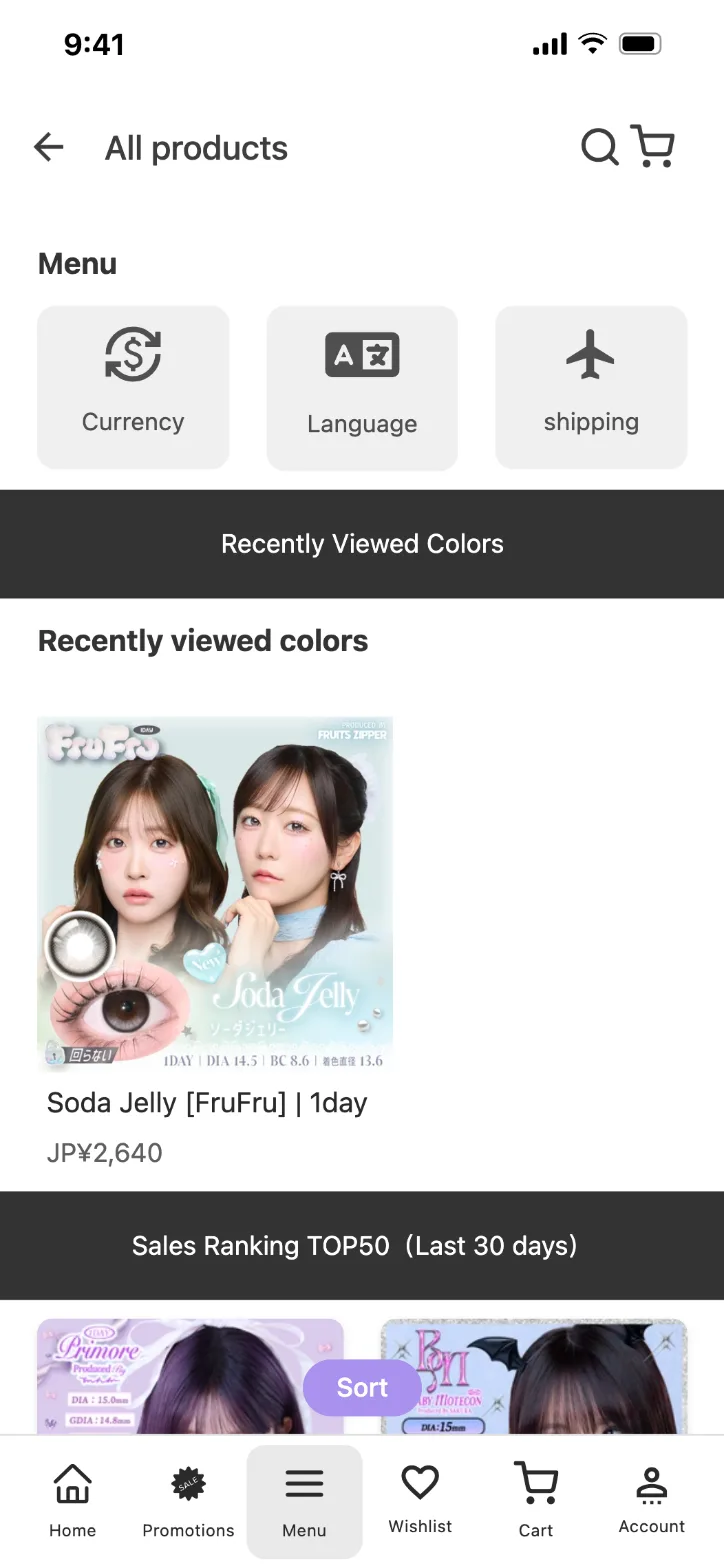
Market-specific prices appear across the app.
A custom block shows each product's medical-device details.
Push!Color's first app, 41 days after the trial began.
A custom block reads each lens's specifications from Shopify metafields. Evlop built the first version. Push!Color's own team extended it.
Selling lenses abroad is harder than selling most beauty products. In Japan a colored lens is a highly controlled medical device, and Push!Color holds the licence to sell them. A shopper choosing between two brown one-day lenses needs the product's data as much as the photos.
A standard product page has a title, photos, a price and a description. A lens page needs more. Push!Color keeps each product's specifications in Shopify metafields, and wanted them on the app's product page in a consistent layout.
Evlop built a custom block that reads those metafields and lays them out under the product. Then Push!Color's own ecommerce team opened the code and extended it. That is how custom blocks are meant to work: Evlop provides the starting point, and a merchant with technical people can take it further without waiting on anyone.
Arabic, Chinese, English, French, German, Italian, Japanese, Korean, Malay, Portuguese, Thai and Vietnamese, with Chinese in two scripts.
Shopify Markets pricing in the app, from the product page through checkout, in the shopper's currency.
Approval number, wear period, water content and diameter, read from Shopify metafields by a custom block.
When a new lens brand arrived in April 2025, a scheduled notification announced it, with the offer attached.
One screen in the app that collects the current promotions.
Store points carry into the app, and the App Store listing promotes a first-order discount and triple points on app orders.
The store's team edits the app itself. Evlop's records show:
Orders did most of the work: 2.6 times as many as in September 2025, with the average order about 4% larger.
Order data is incomplete from October 2025 to August 2026, so the comparison is the same month a year apart.
| Month | Index |
|---|---|
| Aug '25 | 97 |
| Sep '25 | 100 |
| Oct '25 to Aug '26 | Order data incomplete |
| Sep '26 | 272 |
| Oct '26 | 370 |
App shoppers also spend a little more per order than website shoppers.
The app is still a small part of a large cross-border business, and Push!Color's website remains its main storefront. What the numbers show is a channel that more than doubled in a year, on an app the store's own team runs.
Monthly figures are app orders only, as recorded by Evlop, shown as an index of revenue in Japanese yen with September 2025 set to 100. Order data is unavailable or incomplete from October 2025 to August 2026. Order size compares app and website orders over a rolling 30 days to 11 November 2026.

 Honeydew USAWholesale kids' clothing (B2B) · United States
54%of online revenue comes through the app
Read the story
 Lust MéxicoSneakers & streetwear · Mexico
37%of Shopify revenue through the app (30 days to 11 Nov 2026)
Read the story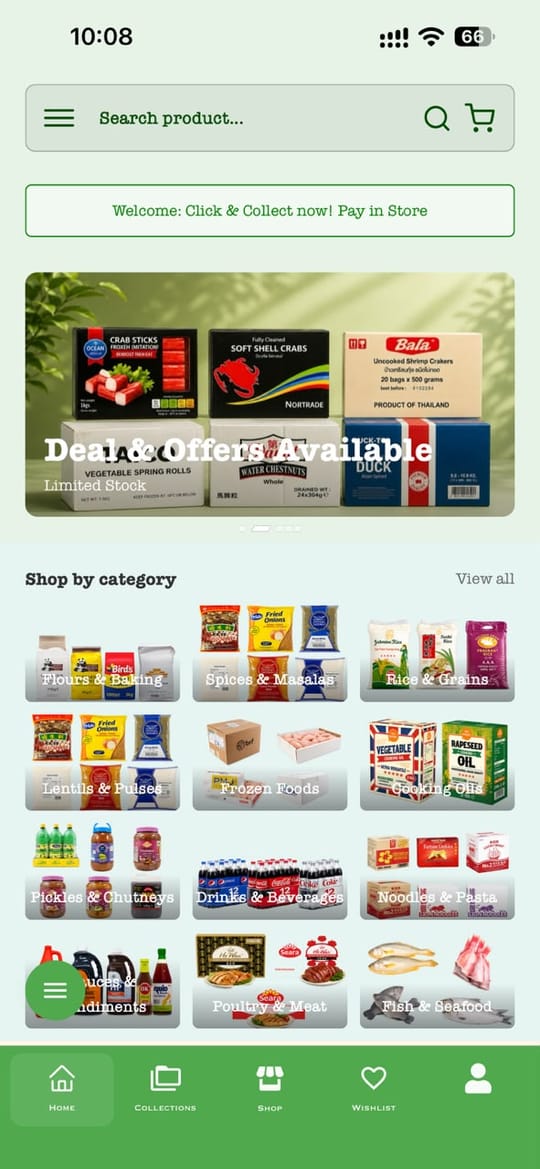
 Tai Lee HongWholesale food · United Kingdom
76%of online orders placed in the app
Read the story