
.png?v=1756731080000&r=1.79)
Mobile push notifications are the highest ROI channel for eCommerce stores. It enables you to reach your customers directly on their phones and have open rates better than any other marketing channel.
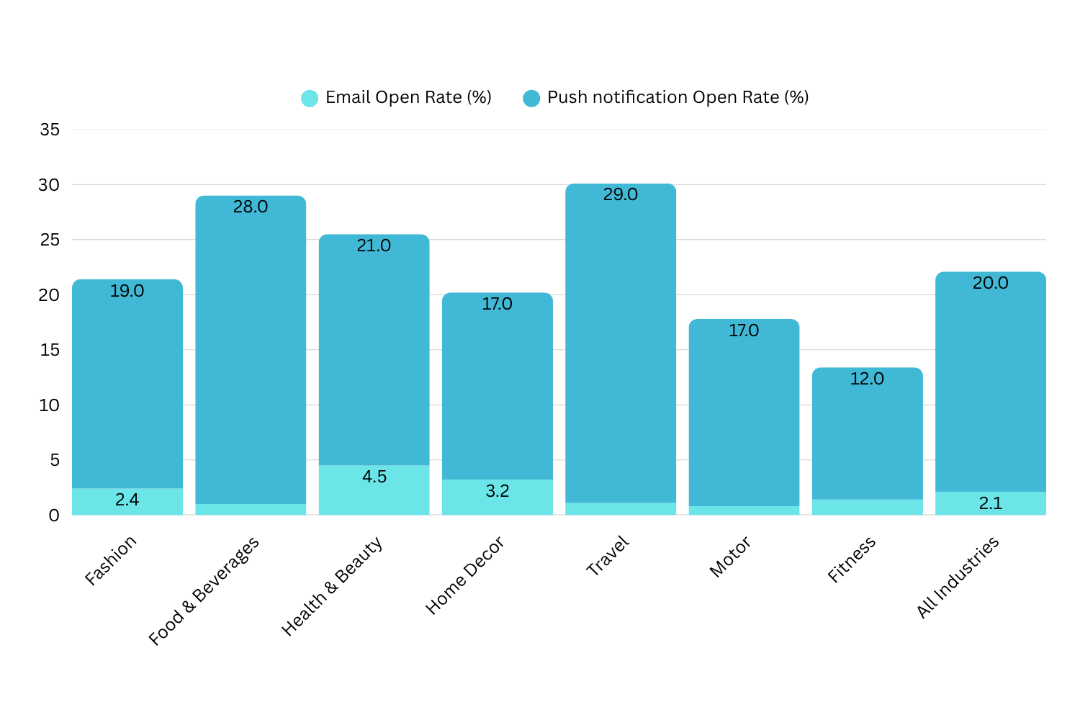
Source: Reckless
For eCommerce store owners with a mobile app, push notification campaigns can dramatically boost engagement and sales. They convert 8-12% higher than other channels, making it particularly important as organic web traffic declines and advertising costs rise.
In this guide, we’ll cover why push notifications are so effective, the best ways to use them in creating campaigns that drive more sales and revenue, and the best practices to get the most out of this powerful tool.
What Is a Push Notification?
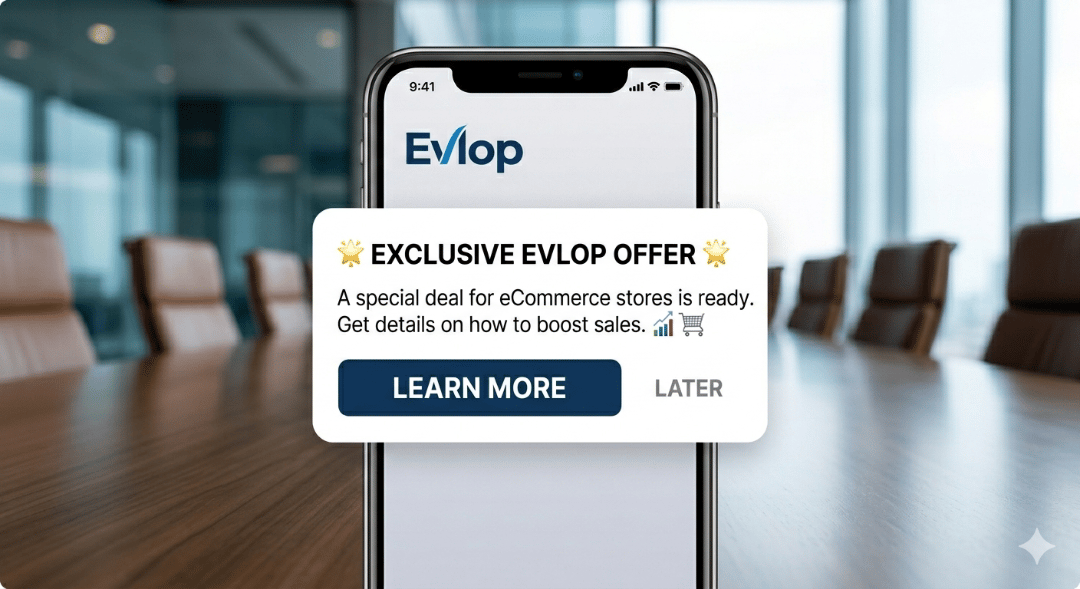
A push notification is a short message or alert that appears on a customer’s mobile device or desktop browser.
These messages are brief and typically include a title, brief body text, and a link or call-to-action that directs the user directly back to your store. Depending on the campaign, push notifications can include rich media like images, GIFs, emojis, or videos.
For eCommerce stores, push notifications are the best way to deliver time-sensitive updates, such as flash sales, abandoned cart notifications, or shipping confirmations, directly to customers’ devices.
When it comes to view and response rates, push notifications outperform other channels by a wide margin. Unlike emails that can land in spam or texts that require paying carriers, push notification reliably delivers to all opted-in users for no additional cost.
eCommerce stores can benefit from using push notifications in many different ways, including:
- High visibility: Messages appear instantly on the lock screen or notification tray.
- Higher engagement: Open rates up to 90% and click-through rates around 10%, far above email’s ~20% open and ~1–2% click-through.
- No per-message cost: Unlike SMS, pushes are free to send at scale.
- Retention and repeat sales: Recover abandoned carts, re-engage inactive users, and drive loyalty.
- Flexibility: Supports text, calls-to-action, and rich media for both promotional and transactional campaigns.
Push notifications ensure that even if web traffic is shrinking, you can still drive sales and engagement by reaching your existing customers on their phones.
How eCommerce Stores Can Use Push Notification
In addition to the benefits of push notifications we’ve already mentioned above, they are also extremely versatile, allowing you to use notifications for marketing, customer service, and almost everything in between.
Here are some of the most effective and practical use cases of push notifications we’ve seen from many of our customers at Evlop:
1. Abandoned Cart Recovery
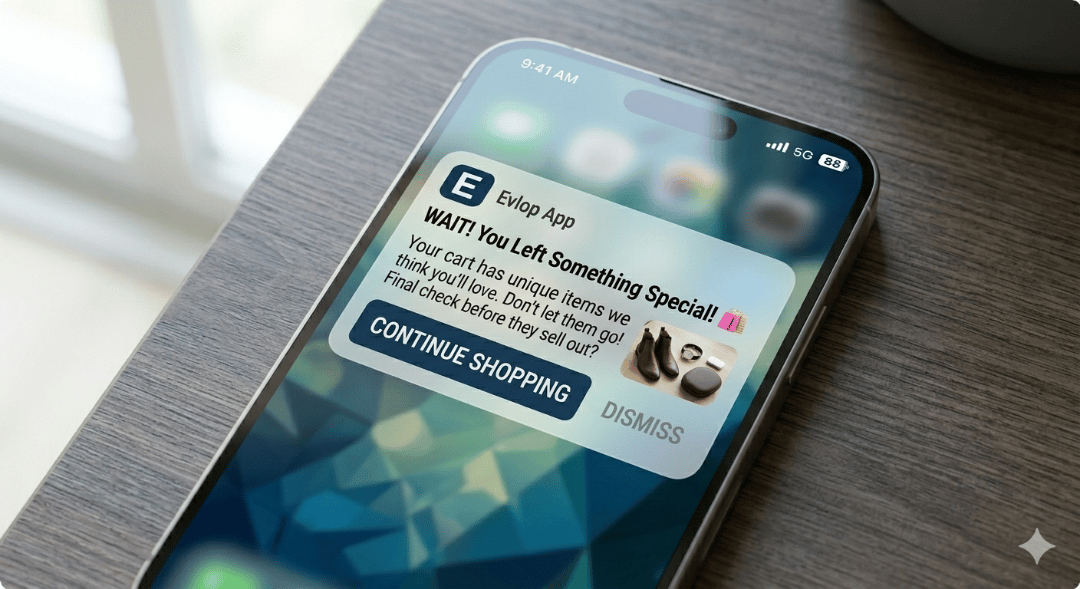
Reminding shoppers about items left in their cart is one of the highest-ROI uses of push notifications.
With cart abandonment rates often ranging from 70-85% on mobile, a timely push can help win back the sale. These notifications usually include a nudge (“You left something in your cart!”) and sometimes an incentive (like a small discount or free shipping).
We’ve seen push notifications for abandoned carts drive roughly 8-12% conversion rates on recovered carts, while some retailers have even recovered six figures in sales within a month using automated cart reminder pushes.
If you are using push notifications for abandoned cart recovery, send the first reminder soon after the cart is abandoned, and consider a short sequence (e.g., 3 notifications) for the best results.
2. Back-in-Stock & Price-Drop Alerts
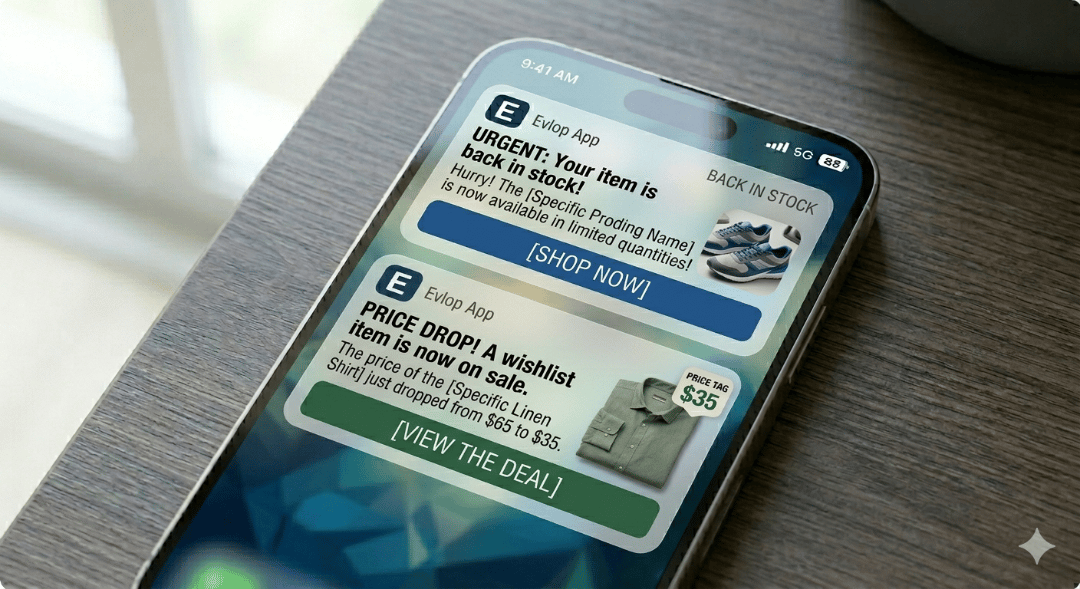
When a product a user wanted is back in stock or now on sale, a push notification can instantly capitalize on that interest. These alerts (“Good news - the item you loved is back in stock!”) create a sense of exclusivity and urgency, since popular items often sell out again quickly.
Shoppers appreciate being kept in the loop, and merchants can quickly turn waiting customers into buyers.
Such back-in-stock pushes are informative rather than “salesy,” and provide genuine value and prompt a quick purchase before the item sells out again.
Similarly, price-drop notifications inform customers that a product on their wishlist is now available at a lower price, which is considered a strong trigger to make a purchase.
3. Order and Shipping Updates
.png?v=1775814813000&r=1.83)
eCommerce buyers expect real-time updates on their orders. Transactional notifications (such as order confirmed, item shipped, and out for delivery) keep customers happy and informed.
By sending these via push, you ensure the info is seen immediately (more reliable than email for urgent updates). This helps to build trust and transparency with customers and can reduce support inquiries.
For example, you might send push notification messages like “🎉 Your order #1234 is confirmed!”, “📦 Order #1234 has shipped – track it here”, and “Out for delivery today - your package is arriving soon.”
These not only reassure the customer but also encourage them to return to your app, where they may continue browsing more products.
4. Flash Sale & Promotional Offers
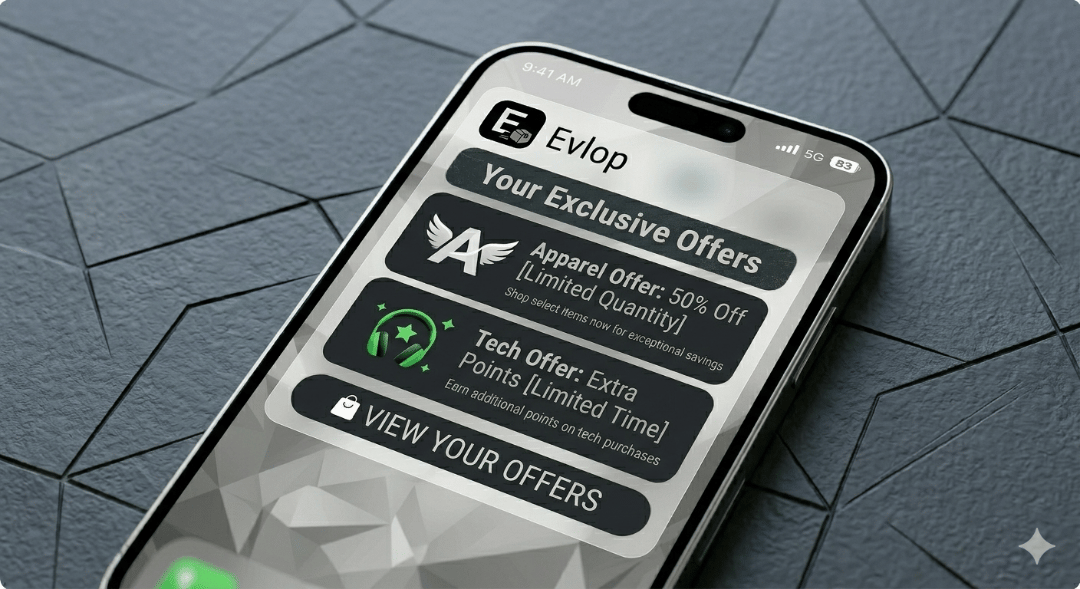
Push notifications are best for driving engagement during sales, promotions, and product launches. Because push messages are displayed immediately, they can generate immediate traffic spikes.
You can announce a flash sale (“🔥 50% off for the next 4 hours - hurry!”) or a new product drop (“🚀 New arrivals just launched, check them out now”).
Since they appear on the user’s screen immediately after you send it, it grabs their attention even if the customer wasn’t actively thinking about shopping at that moment.
The urgency (“limited time” or “today only”) combined with the direct link to the app can significantly boost short-term conversion.
Many brands also use push to highlight app-exclusive deals, rewarding users who have the app with special discounts or early access to sales. This not only drives sales but also reinforces the value of your mobile app to the customer.
5. Loyalty Program & Rewards
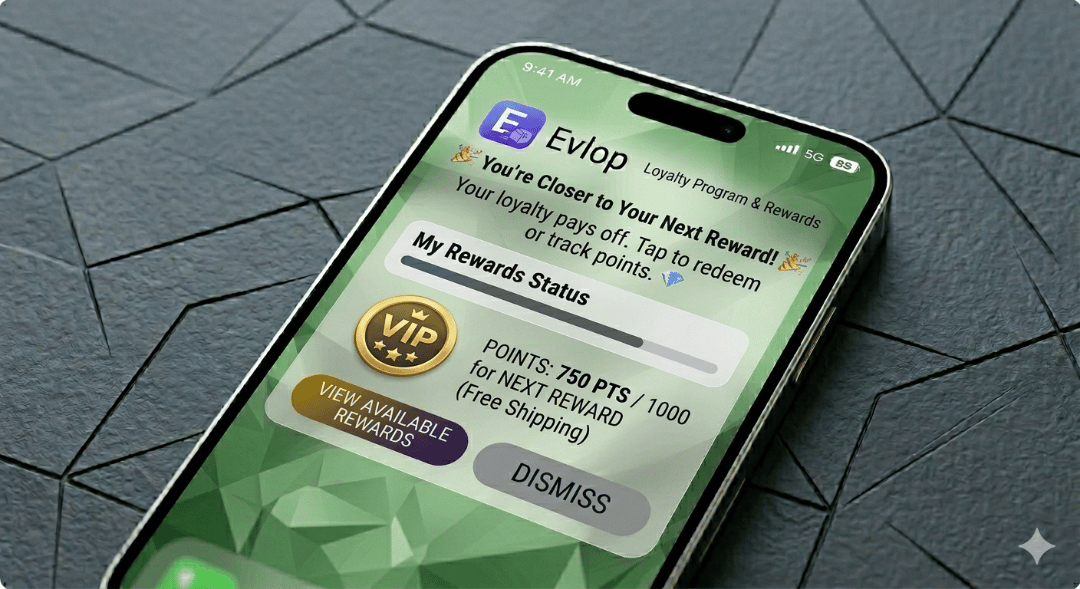
If you run a loyalty or VIP program, push notifications help maintain engagement and excitement.
You can notify users when they earn points (“🥳 You’ve earned 500 points. Redeem them for rewards on your next purchase!), when they move up a tier, or about exclusive offers for members.
Personalized messages, such as “Hey [Customer Name], you’re just 50 points away from a $10 reward,” can motivate repeat purchases.
Personalized push notifications (like those tied to a user’s loyalty status or past purchases) can achieve 4× higher open rates than generic blasts. By creating push notifications that reflect the customer’s status and interests, you increase the likelihood that they’ll engage and feel valued.
Over time, these targeted pushes can double long-term retention compared to not using personalization.
6. Re-Engagement of Inactive Customers
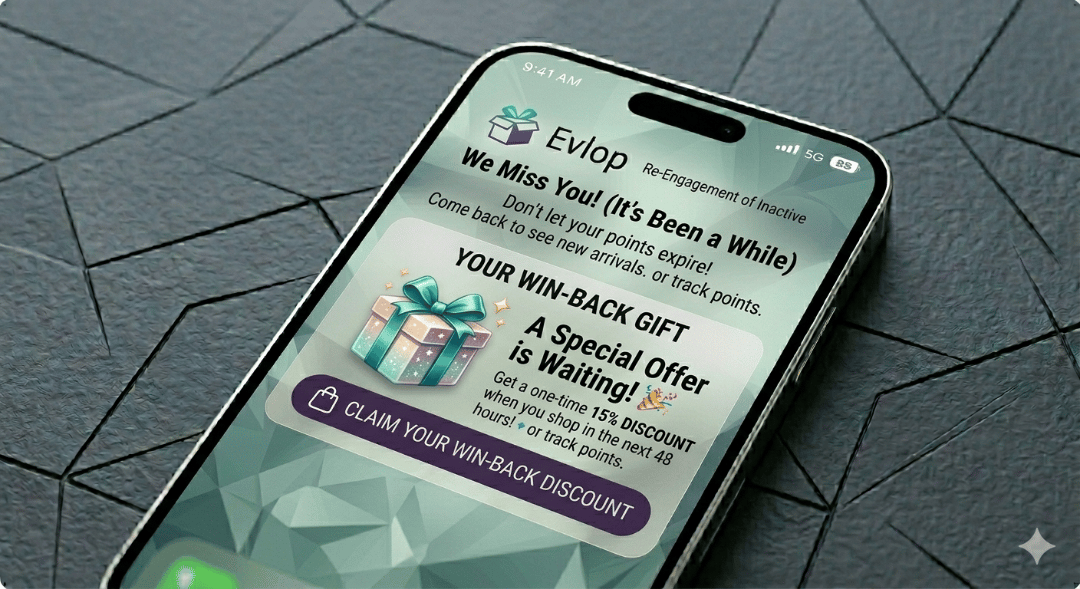
Win-back campaigns via push notifications are a gentle way to nudge inactive users back into action.
If someone hasn’t opened your app or made a purchase in a while, a well-crafted push message can bring them back.
For example: “We miss you! Here’s 20% off your next order, just for you” or “It’s been a while! Check out what’s new in our store 😊.”
These messages remind customers of your brand and often include incentives to encourage repeat business.
Because push notifications land directly on their phone, even users who’ve ignored emails might respond. At Evlop, many brands find that sending a personalized offer or showcasing new arrivals to inactive users can effectively bring them back.
These re-engagement triggers don't have to be manual either — Automation Flow can detect inactivity automatically and fire a win-back notification on a schedule you define once, then forget about.
The key is to make the message feel personal and appreciative, not nagging. Even a small percentage of reactivated users can translate to significant revenue, given the lower cost of marketing to existing customers.
7. Post-Purchase Follow-Ups & Reviews
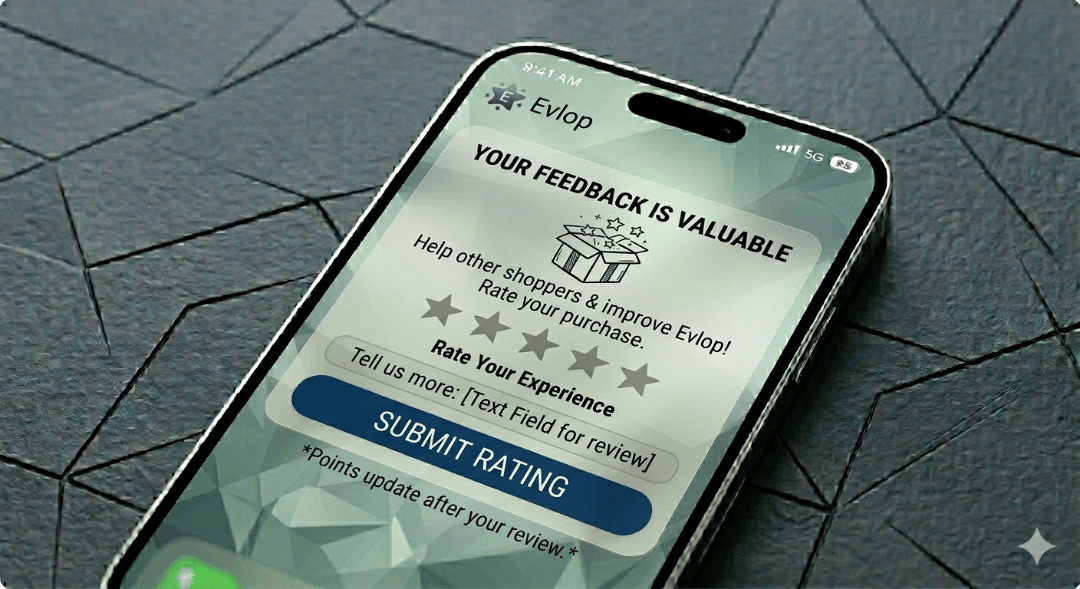
After a customer completes an order, push notifications can help extend the relationship.
A few days after delivery, you might send a push asking for feedback or a review (“👍 Enjoying your purchase? Leave a quick review and let us know!”).
This generates valuable user-generated content, which can increase trust in your store.
You can also upsell or cross-sell in a helpful way (“How’s your new coffee maker? Grab filters and mugs at 15% off! Tap here”).
Since the user has recently purchased from you, a relevant follow-up via push can feel like good customer service rather than a pure advertisement.
These notifications keep the customer engaged after the sale and can encourage a second purchase or referral. Just be sure to keep the tone friendly and not overdo the frequency.
One well-timed follow-up push per order is usually enough to prompt action, whether it’s a review or an add-on purchase.
Best Practices for Successful Push Notification Campaigns
Simply sending push notifications is not a silver bullet. How you use them will determine your results.
Users can always disable notifications if they feel spammed or annoyed, so it’s crucial to follow best practices that respect the user and maximize the impact of each message.
Here are key guidelines for eCommerce push notifications:
1. Personalize and Segment Your Messages
Generic, one-size-fits-all blasts are far less effective than tailored messages. Leverage your Shopify data (browsing history, past purchases, location, etc.) to send notifications that feel relevant to each user.
For example, recommend products in the user’s preferred category or address them by name and reference their most recent purchase.
Personalized push notifications receive about 10% higher engagement than non-personalized ones.
Segment your audience into logical groups (e.g., high-value repeat customers, lapsed users, category preference, location) and create unique messaging suited to each segment’s interests.
This relevance boosts engagement and provides a better user experience, making customers more likely to stay opted in.
This kind of behavior-driven personalization isn't limited to messaging — see how Evlop's App with many faces applies the same logic to reshape the entire in-app experience for each customer.
2. Keep It Short, Clear, and Actionable
Attention spans for push notifications are short. Use concise language and get to the point directly. Aim for one focused message or offer per notification.
If you have multiple things to say, send separate pushes at different times.
The title and first line of the push are especially critical on mobile. Use a strong call-to-action (e.g., “Shop Now”, “View Order”, “Claim Discount”) to tell the user exactly what to do next.
Both iOS and Android truncate long messages (roughly 180 characters on iOS, ~240 on Android), so front-load the important words.
A clear and compelling notification that highlights the value or urgency immediately will elicit the best response.
For example, “🔥 Flash Sale: 30% off all shoes today only. Tap to grab your pair!” is punchy and drives action.
3. Use Rich Media and Emoji (When Appropriate)
Modern push notifications can include images, emojis, or even small GIFs to make the message more eye-catching.
An attractive product image or a relevant emoji can help your notification stand out in the sea of text on a user’s lock screen.
For example, a clothing boutique might include a photo of a model wearing the new arrivals, or a food shop might use a 🍕 emoji in a dinner-time deal notification.
Rich push notifications with visuals consistently see higher engagement than plain text ones.
Just be sure the media is relevant and not too large (to avoid slow load). A bit of visual flair can go a long way in enticing the user to tap your notification.
4. Create a Sense of Urgency (But Don’t Overdo It)
Push notifications that convey urgency (“Limited time offer”, “Only 2 left in stock”, “Sale ends tonight”) often see higher conversion because they prompt immediate action.
Leverage FOMO when it’s genuine. Flash sales, expiring promo codes, low-stock alerts for popular items, etc., are perfect opportunities.
Phrases like “Ends today”, “Last chance”, or adding a countdown emoji ⏳ can spur users to act now rather than later.
However, use urgency sparingly and sincerely. If every push you send screams “Hurry!”, it can come off as spammy or stressful for the user.
Reserve urgent tones for when it truly matters, and balance them with informative or value-adding notifications at other times. The goal is to motivate action, not to cause notification fatigue.
5. Time Your Notifications Wisely
Hitting the right timing can dramatically improve open rates.
Avoid sending pushes at odd hours (e.g., 3 am) or during times your audience is likely busy with other things (commutes, work hours, etc.) unless the content is relevant to that context.
Use analytics or eCommerce data to figure out when your users tend to be most active. For instance, if you observe a high volume of orders in the evening, consider scheduling promotional pushes around 6-8 pm local time when people are off work.
Also consider the user’s time zone. Segment by geography so you send at 10 am local time for each region, rather than a single blast that could reach some users in the middle of the night.
Studies indicate that optimizing send time can significantly boost conversion rates, so it’s worth A/B testing different times to find sweet spots.
Quality also beats quantity: a few well-timed notifications per week will usually outperform daily or hourly pings that annoy users.
6. Respect Frequency and User Preferences
Frequency management is crucial for maximizing the effectiveness of mobile push notifications.
While push notification is a fantastic channel, most users don’t want to be bombarded. A good rule of thumb is to send no more than 2-4 push notifications per week for promotional content, unless the user is in an active campaign or expects a series (like a multi-step onboarding).
Always err on the side of fewer, more impactful messages.
It’s also a great practice to let users customize what notifications they receive. For example, in your app settings, allow users to opt out of marketing pushes while keeping transactional ones, or select topics of interest.
When users feel in control, they’re less likely to unsubscribe entirely. The moment a user finds your pushes irrelevant or too frequent, they may disable notifications, and you’ve lost the channel forever.
So treat the privilege of that direct line with care. Every notification should offer clear value, whether it’s a deal, a useful update, or a personal message; otherwise, it shouldn’t be sent.
7. Optimize the Opt-In Experience
None of these benefits matter if a user never allows push notifications in the first place.
The average eCommerce mobile app sees about a 60% opt-in rate for push notifications. If your rate is significantly below that, you likely need to improve how and when you ask permission.
Don’t immediately trigger the standard “App XYZ wants to send you notifications” prompt upon app installation.
At that point, users have no idea what they’re signing up for and often hit “Don’t Allow” reflexively.
Instead, consider showing a friendly in-app message first that explains the value of your notifications (e.g., “Enable alerts for price drops and exclusive discounts!”).
Prompt after the user has taken a certain action (browsed products or made their first purchase), so they’ve seen value in the app before asking for permission.
Offering a one-time incentive for opting in (like a discount code) can also boost opt-ins. Invest effort into this early step: it will pay off in every campaign you send later.
8. Test, Learn, and Iterate
Just like email or ads, push notification strategies benefit from continuous optimization. Try A/B testing different elements, including message wording, send times, images vs. no images, and call-to-action phrasing, to see what resonates best with your audience
Keep an eye on key metrics: open rate, tap-through rate, and downstream conversion (did the user actually make a purchase or take the desired action after tapping?).
Small tweaks, like an emoji in the title or a more personalized intro, can sometimes yield significantly higher engagement.
Also, monitor your opt-out rates. A spike in users disabling notifications may indicate that you need to adjust the frequency or improve relevance.
Over time, these tests will help you hone the ideal push strategy for your store. Every eCommerce audience is a bit different, so let the data inform your approach.
The most successful eCommerce brands treat push notifications as an evolving program. They learn and get smarter with each campaign, rather than blasting the same generic message over and over.
By following these best practices, you’ll ensure that your push notifications remain a welcome and effective part of your customers’ experience.
Done right, push can significantly boost your retention, conversion rates, and customer lifetime value, all while keeping users happier through timely, relevant communication.
Conclusion
A push notification is effectively a direct line to your customer, one that you completely control and can use whenever needed, at no additional cost.
For eCommerce store owners, a well-executed push notification strategy can generate higher open rates and click-throughs than any other channel, leading to more repeat purchases and recovered revenue that would otherwise be lost to cart abandonment or churn.
Brands using Evlop have leveraged push notifications to drive substantial revenue (some report six-figure monthly sales directly from push campaigns) at virtually no marginal cost.
Push notifications can help you future-proof your marketing. As we discussed, the shift toward zero-click searches means owning your customer relationships is vital. By getting your shoppers onto your mobile app and engaging them with push messages, you sidestep the dependence on Google, Facebook, or email algorithms to reach your audience.
Mobile push notifications offer a unique combination of benefits: immediacy, personalization, high visibility, and cost-effectiveness, all of which translate to better conversion and retention for your eCommerce store.
Ready to take advantage of push notifications? Use Evlop to convert your Shopify store into a mobile app and start sending free, unlimited push notifications today.